 English
 Español
  Português
  русский
  Français
  日本語
日本語  Deutsch
  tiếng Việt
  Italiano
  Nederlands
  ภาษาไทย
  Polski
  한국어
한국어  Svenska
  magyar
  Malay
Malay  বাংলা ভাষার
  Dansk
Dansk  Suomi
Suomi  हिन्दी
  Pilipino
  Türkçe
  Gaeilge
  العربية
  Indonesia
  Norsk
Norsk  تمل
تمل  český
český  ελληνικά
  український
  Javanese
  فارسی
فارسی  தமிழ்
தமிழ்  తెలుగు
  नेपाली
  Burmese
  български
  ລາວ
ລາວ  Latine
  Қазақша
  Euskal
  Azərbaycan
  Slovenský jazyk
  Македонски
  Lietuvos
  Eesti Keel
  Română
  Slovenski
  मराठी
मराठी  Srpski језик

Call Us
+86-15805363117
Email Us
dopinew@gmail.com

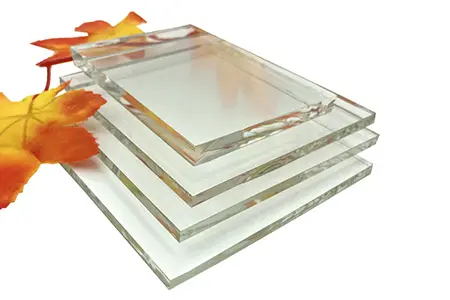
Explaining the key points and safety guidelines for installing white glass
During the installation process, precise operation and detailed handling are particularly crucial. For the installation of white glass in different scenarios, differentiated specifications must be followed. When installing white glass for doors and windows, the glass surface orientation must comply with the design requirements. The frame and glass must be connected with elastic joints, and the size, quantity, and position of the bottom padding must be precisely controlled to ensure uniform force distribution on the glass. For large-sized white glass with a long side greater than 1.5 meters or a short side greater than 1 meter, additional rubber pads must be added, and they should be embedded and fixed with strips and screws to prevent the glass from cracking due to uneven force distribution.
Sealing treatment is the core of white glass installation, directly related to water tightness and air tightness. During construction, the dust and oil stains on the adhesive surface must be thoroughly cleaned, and then wiped with clean cotton cloth dipped in special cleaning agent and dried. Then, sealant must be evenly injected, with the depth of the sealant gap not less than 5 millimeters. After filling, any excess adhesive must be promptly cleaned to ensure the sealant gap is tight, straight, and free of contaminants. "The adhesion between the sealant, the glass, and the edge of the groove must be firm; otherwise, there is a risk of air and water leakage, and in the long term, it may also cause the glass edge to get damp and damaged," emphasized Master Wang.
Safety protection and adaptation to special scenarios should also not be overlooked. For indoor partitions, it is recommended to use tempered white glass as the primary option. The thickness should be adjusted according to the area. The thickness of a regular partition should be no less than 10 millimeters, and for large partitions, it should be above 12 millimeters. At the same time, anti-collision strips should be installed on both sides of the glass, or warning signs should be posted to prevent collision accidents. The depth of the groove where the glass is embedded in the wall, floor or top should be sufficient, and the edges should not come into direct contact with hard materials to prevent the glass from being squeezed due to structural deformation.
After the installation is completed, the acceptance and maintenance cannot be neglected. During the acceptance process, it is necessary to check whether the glass surface is clean and free of stains, whether the installation orientation is correct, whether the fixation is firm and there is sufficient expansion allowance, and whether the surface is flat without warping. The sealing adhesive filling should be full and tight, and the adhesion should be firm. The deformation of the gasket used in the soft connection after being under pressure should be controlled within 25% to 35% to ensure that the water and air tightness meets the standards. During daily use, sharp objects should be avoided from hitting the glass edge. Regularly check whether the sealing adhesive is aging or cracking, and replace and maintain it in time.
Send Inquiry
-
E-mail
X
We use cookies to offer you a better browsing experience, analyze site traffic and personalize content. By using this site, you agree to our use of cookies.
Privacy Policy
News
 Explaining the key points and safety guidelines for installing white glass2026/01/28
During the installation process, precise operation and detailed handling are particularly crucial. For the installation of white glass in different scenarios, differentiated specifications must be followed. When installing white glass for doors and windows, the glass surface orientation must comply ......
 Know these 6 key indicators of aluminum alloy door and window materials!2026/01/28
The series number indicates the thickness of the door frame in millimeters. Aluminum alloy sliding doors are available in 70 and 90 series; the 70 series is sufficient for interior residential aluminum alloy sliding doors.